Your Ad Here
Showing posts with label Appriciation. Show all posts

Monday, January 26, 2009

Remembering Khemadasa

Remembering Khemadasa

‘Khemadasa Musical Phenomenon’ concert tomorrow:


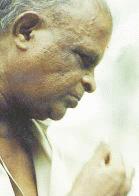
Premasiri Khemadasa

Maestro Premasiri Khemadasa would have turned 72 this January. And though he is no more, his spirit will live once more on January 27, when at the Jubilee Hall of Galle Face Hotel at 6.30 p.m., his daughters, friends and students bring forth the glory of his music in the concert ‘Khemadasa Musical Phenomenon’.

It should be a treat for lovers of Khemadasa’s music for it will have the most loved compositions of this great musician. Excerpts from his operas Manasavila and Agni, choral work ‘Bilindo’ and ‘Dambulugale’ done with the Khemadasa Foundation students, the haunting scores of the films Goluhadawatha and Nidhanaya and some popular film and teledrama songs will be included in the concert.

The beautiful voice of Amarasiri Pieris and the talents of Kamal Addararachchi will be showcased with the students of Khemadasa’s, while ‘Beyond Horizons’, a voice and Orchestra work that Khemadasa premiered in Prague in 1998 will be played by Laskman Joseph de Saram’s Chamber Music Society.

The torchbearers of the Khemadasa legacy, his daughters Anupa, a cellist and Gayathri, pianist and composer, will lead the music. Gayathri, already a well known composer in Prague, will perform some of her own work from an Opera (Phoolan Devi) that she is currently writing music for.

Tickets for the concert will be available from the 17th January at the Sarasaviya Bookshop and at the Galle Face Hotel on the day of the concert.

Tuesday, October 28, 2008

Khemadasa: End of a musical journey !

Khemadasa: End of a musical journey

Veteran music composer Dr. Premasiriri Khemadasa was cremated yesterday at the Independence Square amid state honours for his services to Sri Lankan music.

He was 71 at the time he passed away at Apollo Hospital in Colombo.

The remains of Music Maestro Premasiri Khemadasa being taken to Independence Square for cremation yesterday. Picture by Sudath Nishantha

Actors, actresses , singers , music composers, film directors, producers, his pupils at Premasiri Khemadasa Foundation and the Khemadasa Study Centre, religious dignitaries, schoolchildren, university students , politicians, artistes and his admirers came to pay their last respects to Khemadasa at the Independence Square.

First Lady Shiranthi Rajapaksa paid her last respects to Khemadasa at his residence at Rajagiriya yesterday morning. Opposition Leader Ranil Wickremesinghe also paid his last respects to the master musician.

Khemadasa left his wife S.Somalatha Perera and two daughters Anupa Kemadasa and Gayathri Khemadasa.

Khemadasa pioneered a greater tradition of Sri Lankan music by skillfully combining Sri Lankan folk music, Hindustani music, Western classical music and many other streams of music to create a unique style.

He was a music genius who emphasized the importance of expressing a piece of music rather than restricting oneself to playing what is written on the notation sheet. He maintained that it was essential to understand the movement of a note pattern of a given piece to play it. Khemadasa said it was the expression that produces the “magical element” in music in the sphere of musical sound.

Khemadasa composed symphonies like Muhuda and Mage kale mavni. He used operatic vocals in his music with his vast knowledge of opera . He is the only known Sri Lankan musician who practised and created opera. His famous operas include Manasawila and Doramandalawa.

Recently he created the opera Agni with the story line taken from Greek mythology. He composed music for Golu Hadawata and Nidhanaya directed by film director Lester James Piries. Later he contributed to films Agnidaahaya and Ammavarune , the latter by Lester. Apart from film music Dr. Khemadasa has composed music for teledramas and theatre.

His collaboration with director Jayantha Chandrasiri has turned out remarkable products. The theme he created for Chandrasiri’s television series Dandubasnamanaya was much acclaimed .

Even in his 70s , he worked hard to secure the future of Sri Lankan music.

As pointed out by his admirers and critics, close associates and musicians , it remains a challenge to take forward the great tradition of maestro Khemadasa after his demise.

***********
WE MISS YOU ! - Admin

KHEMADASA;THE ‘OBAMIAN’ MUSICIAN

KHEMADASA;THE ‘OBAMIAN’ MUSICIAN


Dr. Premasiri Khemadasa of late and Khemadasa ‘Master’ of all times, will live into our future with many trying to define him in many different tones and colours. He certainly lived his long musical life with many facets and many shades. At times contradicting himself, but never afraid to do so. At times reaching to the past, but never loosing the grip on the future. Picking what he wanted from the North Indian tradition, yet never wanting to stop there. He, Khemadasa was in fact a curious musical traveller, who couldn’t simply stop travelling. And for me, therefore, he was not just another great musician. Not just a creative composer. He was the musical expression of post independent Sri Lanka that grappled to find its future direction, and to date is still struggling. He was therefore the “Obamian” Sri Lankan musician who wanted a change and believed in it.

Developing a national musical identity

Khemadasa finds his foot hold in the Sinhala musical world, or rather, Khemadasa is taken note of in the Sinhala musical world in early 60’s, when others before him were trying to identify and develop a musical genre for the Sinhala society, that was understood as developing “our own national musical identity”. Ananda Samarakoon perhaps pioneered the voyage in searching for a musical soul in ordinary Sinhala language, when he a baptised Christian, George W. Alwis, became a converted Buddhist by the name of Ananda Samarakoon. His lyrics were simple and ordinary as in “Podimal ethano” and “Wiley malak pipila”. Sunil Shantha, another Catholic was a contemporary of Samarakoon who went further with his Sinhala lyrics and the pace was set to make a difference in song from that which ‘Ceylon’ in its pre-independence, listened and sang. Munidasa Kumaratunge was a strong influence with his “Hela” language during that period and is very evident in Sunil Shantha’s genre of songs.

But that was ‘songs’ and not music. Music had to be brought in from somewhere. During the pre independence period the most inspiring experience for music came from India that fought the British stronger and louder than we Ceylonese. Reaching out for the Western classical music was “imperialistic”. Our musical base thus became North Indian Hindustani and less Dravidian. Samarakoons and Sunil Shanthas had their first grooming in North Indian musical tradition with Sunil Shantha taking a special fancy towards Bengali folk. W. D. Albert Perera leaves Ceylon to learn music in India and comes back as “Visharada” Amaradeva. Sinhala musical culture thus gets institutionalised on what came to be known as “Uttara-bharatheeya” music. Songs for Radio Ceylon was rated on their relationship with that tradition. Music in schools had their syllabi based on that same tradition. Sinhala music per se was what based itself on Uttara-bharatheeya music. “Baila” the popular culture in coastal areas coming down from the Dutch – Portuguese influence was not taken for any consideration in creating a Sinhala musical identity. To that extent, the Sinhala society was able to identify itself separately from the Tamil society which had its musical life born out of Karnataka and other Dravidian musical influences.

The ordinary life in society meanwhile had a different experience through popular South Indian Tamil film and its influence on post independent Sinhala cinema in the 50’s. It was then that Makuloluwa and Kulatilake experimented to be different through Sinhala folk poems that had a very simple melody and a soft rhythm. Although their efforts provided a collection of some 3,500 folk ‘songs’ those folk traditions did not have a strong musical language to develop a new musical tradition of “our own”. Therefore even at the end of the decade of 50 and early 60 with the ’56 Sinhala resurrection of Bandaranaike energising the Sinhalisation process, it was only the Sinhala song that started developing with new genres of lyrics with different metres, but not Sinhala music. Sinhala music was nothing more than North Indian Hindustani tradition.

Classical Western music

It is within this lost effort of developing a musical tradition with a Sinhala face, that Khemadasa emerges without any serious musical roots or tradition. He had learnt music formally for a short while, but wasn’t a hardened traditionalist. Therefore his instinct and yearning to learn music on his own, left him outside all others. And left him on a voyage of learning and de-learning to learn more. Being one without a tradition gave him the privilege to seek all traditions. He thus roamed the classical world of Western music that for the Sinhala musicians was almost taboo. While the Sinhala society was moving in search of its past glory, while the Sinhala society was politically positioned against the developed West and refused to get influenced by the Western culture, Khemadasa was moving in the opposite trajectory. He was talking of Bach, Mortzart and Beethoven. He indulged and marvelled in the vastness of their musical compositions and tried to understand how they had interpreted the world around them through musical arrangements. He then wanted to experiment in interpreting our own experiences through their form of music.

Post Soviet music

The 70’s gave him an added advantage too. With our politics heavily layered with Soviet values and thinking, there were lots of traffic between Socialist East bloc countries and Colombo. The advantage was in cultural exchanges. That was the era when Russian authors became the only known international literary heroes to the Sinhala reader. That period gave Khemadasa an opportunity to acquaint post Soviet music at its best. And he grew to be a musician in search of new landscapes in music and without tradition.

This Khemadasa was thus revolting against his own musical learning, trying to give his creative self another platform that went beyond writing music for songs. That he found in film music. The greatness of Khemadasa comes to life in film music that was neither background nor filler. There he had a larger canvas than in writing music for songs to experiment and create his own style. While “Bambaru Awith” could be the popular Khemadasa, the Maestro was in “Nidhanaya” that is internationally ranked as one among the Best 100 films in the world with Khemadasa’s musical score.

Tomorrow’s rhythm

Khemadasa definitely was too large a character to sit along with classical traditionalists. He wasn’t a formal musician. He was one who wanted to feel the sweat of the toiling men and women, to breathe the salty pathos of the women on the rough sea edge and one who wanted to caress the love and agony of all mothers. And he Khemadasa, was one who struck the most emotional chord for them all in the realms of sophisticated musical emotions. One who could not live for today but searched the rhythm of tomorrow’s life; the “Obamian” musician of Sri Lanka.

Kusal Perera - Daily Mirror

Star Lanka Online TV Channel on Justin TV

Watch live video from starlankaonline's channel on Justin.tv Watch Star Lanka Online TV From The Web.

Place Youe Own Ad Here

Facebook > Fans